About Chiswick Medical Centre At Chiswick Medical Centre, we provide local residents with men's, women's and children's healthcare, covering a broad range of specialties and imaging. Many of our consultants and private GPs live in the Chiswick area and have a shared interest in caring for you when you need it most. Free on-site parking available. Book an appointment today! Chiswick Medical Centre Bond House 347-353 Chiswick High Road Chiswick W4 4HS www.hcahealthcare.co.uk/chiswick Centre opening times:
|
During this period of intense skeletal growth, adolescents may suffer muscle aches and pains as their bones grow at a faster rate than their muscles, resulting in tight muscles that pull on their insertions and can cause inflammation and pain. Due to tight calf muscles, this can occur at the heel from around 10 years old, and is known as Sever's disease. Similar disorders can occur elsewhere in the body, including around the knee, where it is known as Osgood Schlatter's disease.
Playing sport and treating the pain
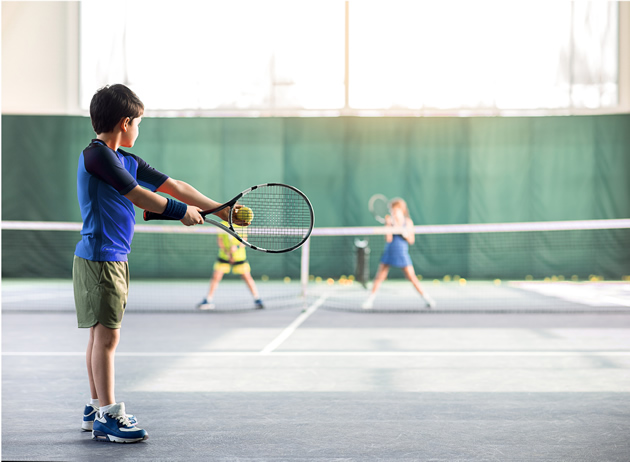
Although these disorders are benign they can nonetheless cause much discomfort and worry, particularly as they become worse after periods of exercise and can sometimes prevent the individual from playing sports altogether. However there is no reason for your child to completely stop engaging in sport, unless their symptoms make it too unpleasant to do so.
Taking anti-inflammatories before and after exercise can help, as does icing, however the mainstay of treatment is regular stretching. This allows the muscles to lengthen and catch up with the new bone length, thereby decreasing the tension on muscle insertions. A physiotherapist will be able to devise a good stretching programme, which then needs to be followed twice daily, and I also suggest stretching before and after sporting activities as well.
Avulsion injuries
Occasionally, and usually around the hip, tendons can sometimes pull off from their bony insertions due to a sudden and vigorous contraction of an overly tight muscle. We call these “avulsion” injuries. They can for example occur with a sudden hamstring contraction, where one of the hamstring muscles pulls off a piece of bone from where it inserts on the pelvis. This causes acute and fairly severe pain and it will usually become impossible to continue with sporting activity. An avulsion injury normally heals with rest and a gradual rehabilitation that includes physiotherapy and a prophylactic stretching program, without the need for surgery. X-rays usually confirm the diagnosis; sometimes a scan is useful if the X-ray is unclear but will not always be necessary, and treatment will very rarely involve surgery.
When to visit an orthopaedic specialist
Chronic bone and muscle aches may frequently be a manifestation of rapid skeletal growth, but it's important to exclude more serious conditions that may require further investigation and treatment; particularly with acute or severe pain or following an obvious sporting injury.
There are other more serious adolescent growth conditions such as a slipped upper femoral epiphysis, which is a fracture through one of the growth plates in the hip because of weakening caused by pubertal hormones. For this reason any severe, acute or persistent pain or limp should prompt a visit to an orthopaedic surgeon. It is also important to note that it is very common for hip problems in children and adolescents to present themselves as knee pain only.
If there is any doubt, seeing a children's orthopaedic specialist or sports medicine expert can put your mind at rest, as they will advise whether or not any further investigation is required, and if physiotherapy may also be beneficial.
Advertisement
February 5, 2020
