Hogarth's House on Black Voices in America's Founding Story
Exhibition shines a light on slaves and the struggle for independence
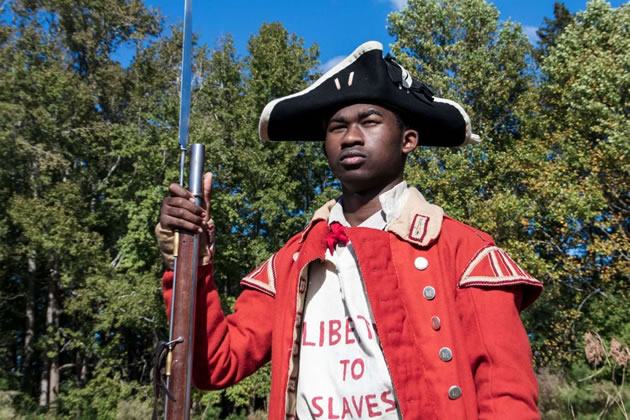
Erik Kirk reenactment - Liberty to Slaves
September 26, 2026
As Black History Month approaches, a new exhibition at Hogarth’s House in Chiswick is challenging traditional narratives of American independence by highlighting the often-overlooked contributions and experiences of Black people whose lives were deeply intertwined with the birth of the United States.
Titled "How We Lost America", the exhibition also marks the 250th anniversary of the American Declaration of Independence. Rather than focusing solely on the familiar figures of the revolutionary era, it explores the stories of enslaved soldiers, women, writers and freedom-seekers whose struggles reveal the contradictions at the heart of America's founding ideals.
One of the exhibition's central themes is the contrast between the revolutionary rhetoric of liberty and the reality of slavery. While some prominent figures in the independence movement, including John Adams and John Laurens, spoke out against slavery, others such as Thomas Jefferson and Benjamin Franklin benefited from the institution, despite wrestling with its moral implications.
Among the figures featured is Phillis Wheatley, the pioneering poet who became the first African American to publish a book of poetry. Enslaved in America, Wheatley's literary success was made possible through her connection with Britain after American publishers rejected her work because of racial prejudice. Her arrival in London followed the landmark Somerset v Stewart ruling of 1772, which established that slavery had no basis in English common law. By publishing her poetry in 1773, Wheatley challenged contemporary assumptions about the intellectual abilities of African people and became a powerful symbol of Black achievement during the revolutionary era.
The exhibition also uncovers the stories of Peter and John King, two enslaved men owned by Benjamin Franklin. Their experiences, which included family separation, self-emancipation and the development of artistic talents, illustrate both the hardships of enslavement and the resilience of those who endured it.
Visitors will also learn about the Black Loyalists who sought freedom amid the upheaval of the American Revolution. Many ultimately forged new lives in Britain and Sierra Leone, demonstrating how the struggle for liberty extended far beyond the battlefields and political chambers usually associated with the birth of the United States.
The exhibition takes its title from Britain's perspective on the loss of the American colonies, but its broader purpose is to restore the voices of Black individuals whose actions, creativity and determination helped shape the transatlantic world. Through personal stories and historical research, it invites visitors to reconsider who is remembered in the story of American independence and who has been left out.
"How We Lost America" runs throughout October at Hogarth’s House, Chiswick, and is accompanied by a programme of talks by historians and a book launch. After its Chiswick run, the exhibition will tour to Boston Manor House in Brentford, the Surrey History Centre in Woking and Bull House in Lewes.
The exhibition is presented by Aurora Metro Arts & Media and supported by The National Lottery Heritage Fund. National Lottery Heritage Fund.
Hogarth’s House is located on Hogarth Lane, Great West Road, W4 2QN.
Like Reading Articles Like This? Help Us Produce More This site remains committed to providing local community news and public interest journalism. Articles such as the one above are integral to what we do. We aim to feature as much as possible on local societies, charities based in the area, fundraising efforts by residents, community-based initiatives and even helping people find missing pets. We’ve always done that and won’t be changing, in fact we’d like to do more. However, the readership that these stories generates is often below that needed to cover the cost of producing them. Our financial resources are limited and the local media environment is intensely competitive so there is a constraint on what we can do. We are therefore asking our readers to consider offering financial support to these efforts. Any money given will help support community and public interest news and the expansion of our coverage in this area. A suggested monthly payment is £8 but we would be grateful for any amount for instance if you think this site offers the equivalent value of a subscription to a daily printed newspaper you may wish to consider £20 per month. If neither of these amounts is suitable for you then contact info@neighbournet.com and we can set up an alternative. All payments are made through a secure web site. One-off donations are also appreciated. Choose The Amount You Wish To Contribute. If you do support us in this way we’d be interested to hear what kind of articles you would like to see more of on the site – send your suggestions to the editor. For businesses we offer the chance to be a corporate sponsor of community content on the site. For £30 plus VAT per month you will be the designated sponsor of at least one article a month with your logo appearing if supplied. If there is a specific community group or initiative you’d like to support we can make sure your sponsorship is featured on related content for a one off payment of £50 plus VAT. All payments are made through a secure web site. |